
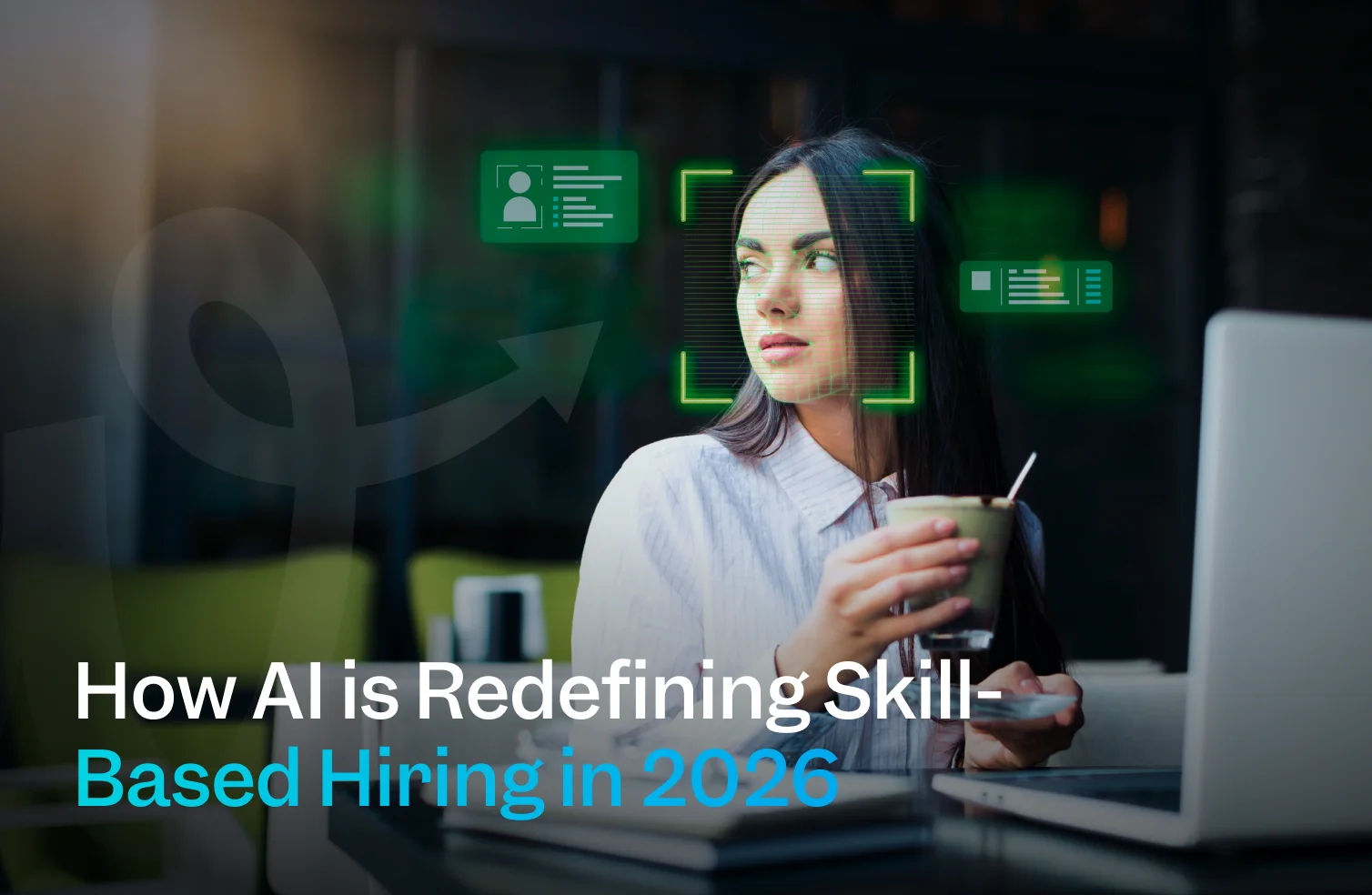
Why Skill-Based Hiring Will Define Workforce Quality in 2026
Hiring in 2026 looks very different from what it did even five years ago.

Companies are receiving more applications than ever. AI tools can generate polished resumes in seconds. Candidates know how to optimize profiles with the right keywords. On paper, everyone looks qualified.
But inside organizations, leaders are asking a harder question:
Why are performance gaps still growing?
The answer is simple. Resumes show history. They don't prove capability.
That's why skill-based hiring is no longer just a trend. In 2026, it will define workforce quality. Companies that hire based on proven skills, real-world performance, and measurable capability will build stronger teams. Those that continue relying on degrees, job titles, and intuition will struggle with mis-hires and low productivity.
The Problem with Traditional Hiring Models
Most hiring processes still begin with resumes. Recruiters scan education, past employers, certifications, and keywords. Shortlisted candidates move to interviews. Decisions are often influenced by communication style, confidence, or personal impressions.
There are three major issues with this model:
1. Resume inflation is real.
AI-assisted resume writing has made it easier to polish experience. What looks impressive may not always translate into real ability.
2. Degrees don't equal job readiness.
A degree shows exposure. It doesn't prove someone can execute tasks in your specific environment.
3. Interviews are subjective.
Unstructured interviews introduce bias. Two candidates can be evaluated very differently for the same skills.
The result? Companies hire based on potential perception instead of validated performance. That directly impacts workforce quality.
What Is Skill-Based Hiring?
Skill-based hiring flips the traditional model.
Instead of asking, "Where did you work?" it asks, "What can you do?"
Instead of filtering by degree, it evaluates capability.
Instead of relying on conversational interviews, it uses structured assessments and real-world simulations.
In practical terms, skill-based hiring includes:
- Role-specific task assessments
- Scenario-based problem solving
- Structured behavioral evaluations
- Data-driven scoring
- Standardized evaluation frameworks
This approach focuses on measurable output. Candidates demonstrate ability before they are hired, not after.
And that changes everything.
Why 2026 Demands a Different Hiring Approach
The workforce itself has changed.
Skills Are Expiring Faster
Technology cycles are shorter. Tools evolve quickly. What was relevant in 2022 may already be outdated. Hiring based on static credentials doesn't work in a dynamic environment.
Remote Hiring Has Expanded Talent Pools
Companies now hire globally. You're not comparing five candidates in one city. You're comparing fifty across time zones. Skill validation becomes essential at scale.
AI Has Transformed Job Roles
Automation is reshaping responsibilities. Roles are becoming hybrid. Employees need adaptable, transferable skills — not just traditional experience.
Performance Pressure Is Higher
Startups need faster execution. Enterprises need efficiency at scale. There's less tolerance for extended ramp-up periods.
In this environment, hiring mistakes are expensive. Skill-based hiring reduces that risk.
How Skill-Based Hiring Improves Workforce Quality
Workforce quality isn't about headcount. It's about capability density — the overall skill strength of your team.
Here's how skill-based hiring directly improves it.
1. Better Job Fit
When candidates complete real-world tasks during the hiring process, you see how they think and execute. This reduces surprises after onboarding.
2. Faster Productivity
Employees hired through skill validation require less adjustment time. They've already demonstrated competence in similar scenarios.
3. Reduced Bias
Structured skill assessments standardize evaluation. This limits unconscious bias and improves fairness.
4. Higher Retention
When people are hired for what they can actually do, they are more confident and aligned. This reduces early attrition.
5. Stronger Teams
Managers can hire complementary skill sets instead of overlapping backgrounds. Teams become more balanced and capable.
In short, workforce quality becomes measurable, not assumed.
The Business Impact of Skill-Based Hiring
This shift isn't just philosophical. It produces measurable outcomes.
Companies adopting skill-based hiring in 2026 report:
- Faster shortlisting cycles
- Improved selection accuracy
- Reduced cost per hire
- Higher first-year performance ratings
- Improved internal mobility
When hiring is structured around skills, decisions are backed by data. Leadership gains confidence in talent acquisition. HR shifts from administrative processing to strategic workforce planning.
And perhaps most importantly, hiring becomes scalable.
The Role of AI in Scaling Skill-Based Hiring
Skill-based hiring works best when supported by intelligent systems.
AI-powered platforms now enable:
- Automated assessment distribution
- Resume parsing focused on skills, not just titles
- Standardized scoring models
- Behavioral pattern analysis
- One-way video interview evaluations
- Bias detection mechanisms
AI removes manual bottlenecks. It ensures consistency across thousands of candidates.
Instead of reviewing every resume manually, recruiters focus on insights. Instead of subjective scoring, decisions are data-backed.
AI doesn't replace recruiters. It enhances precision. And in 2026, precision defines workforce quality.
What Companies Should Do Now
If workforce quality is a priority, companies need to start redesigning hiring frameworks today. The shift does not have to be complicated, but it does need to be intentional and structured.
- Audit your current hiring process. Understand how decisions are being made today and where performance validation is missing.
- Identify where subjective evaluation dominates. Spot areas where personal bias, unstructured interviews, or resume assumptions influence hiring outcomes.
- Replace degree-only filters with skill-based benchmarks. Define clear, measurable capabilities required for each role instead of relying only on educational background.
- Introduce structured assessments aligned to job roles. Use task-based evaluations and scenario-driven tests that reflect real job responsibilities.
- Standardize scoring criteria across interviewers. Ensure every candidate is evaluated against the same framework to improve fairness and accuracy.
- Leverage AI tools to automate and scale evaluation. Adopt platforms like HireGroww that enable AI-powered skill assessments, automated interview distribution, structured scoring, and data-backed candidate insights.
This does not require a complete overhaul overnight. It requires consistent steps toward measurable performance-based hiring. With tools like HireGroww, organizations can modernize their recruitment process without adding operational complexity.
The Future Belongs to Performance-Based Hiring
In 2026, the way companies talk about hiring has clearly changed. It is no longer about who looks impressive on paper or who has the most polished resume.
What really matters now is who can actually do the job. Businesses are realizing that true workforce quality comes from proven skills, not assumptions.
When companies hire people based on what they can demonstrate through tasks and assessments, they build stronger and more adaptable teams. These teams are better prepared for rapid technology changes and uncertain market conditions.
On the other hand, organizations that continue to rely only on resumes, degrees, and gut feeling often struggle with poor performance and higher employee turnover.
Skills have become the real currency of employability. Companies that measure and value skills properly will build better teams and achieve long-term success.
The future of hiring is not about reading resumes. It is about validating skills, using data to guide decisions, and focusing on real performance. And that future has already begun.
In this article

Stop Hiring on Assumptions
Start building teams that are tested, scored, and proven before day one.
Transform Your Hiring Process